NSF IUCRC: Center for Grid Enhancing Technologies for Future Energy Systems Integration and Transmission (GET-FIT)
GET-FIT: Enhancing modern electric power systems through industry–university collaboration to improve capacity, resilience, and cost control. View the slide deck of the YouTube presentation.
About the Center
The Center for Grid Enhancing Technologies for Future Energy Systems Integration and Transmission (GET-FIT) is a National Science Foundation (NSF) Industry–University Cooperative Research Center (IUCRC) led by the New Jersey Institute of Technology (NJIT) in partnership with Rowan University (NSF Award # 2515138 and 2515218). The Center focuses on advancing grid-enhancing technologies that improve the capacity, reliability, and affordability of modern power systems while enabling the integration of emerging energy resources and large electrical loads. Through a collaborative research model that brings together universities, industry partners, utilities, system operators, and government agencies, GET-FIT conducts fundamental, pre-competitive, use-inspired research addressing shared critical industrial needs, while building the future workforce needed to support evolving energy infrastructure.
What is IUCRC?
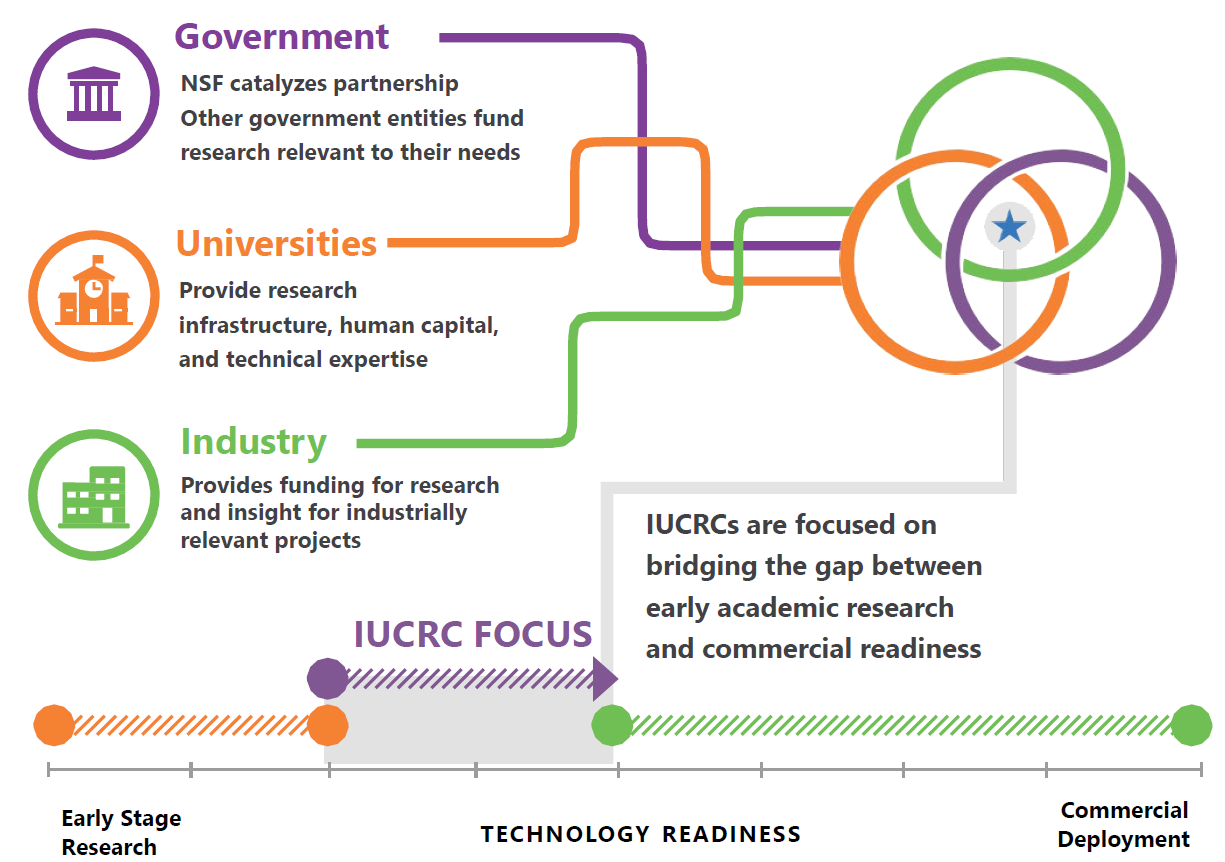
The NSF IUCRC program is a nationally recognized industry–government–academia partnership model that enables universities, utilities, system operators, technology companies, manufacturers, startups, and government agencies to collaboratively conduct fundamental, pre-competitive, use-inspired research addressing shared critical industrial needs.
Through annual membership, partners collectively shape the research roadmap, prioritize and select projects, and guide technology translation pathways from early-stage concepts toward validated prototypes and system-level demonstrations (TRL 3–6). The IUCRC framework enables members to collectively envision and fund research in a shared-cost, highly cost-efficient innovation model that offers early access to knowledge, facilities, technical talent, and intellectual property, while building a highly skilled workforce pipeline and a sustainable long-term innovation ecosystem.
View the IUCRC Introductory slide deck from the NSF
View the NSF recorded webinar providing an overview of the IUCRC program
Mission
The mission of GET-FIT is to establish a world-class industry–university collaborative research center focused on the research, deployment, and workforce development of grid-enhancing technologies that enable future energy systems integrating renewable generation, advanced transmission solutions, and rapidly growing electricity demand. The Center aims to bridge the gap between academic innovation and real-world grid deployment by working closely with utilities, technology providers, government agencies, and system operators. We emphasizes clear pathways to applied research and commercial development, bridging academic innovation with utility-scale deployment.
Research Focus
GET-FIT focuses on technologies that enhance the performance and flexibility of existing and future power grids. Research topics include grid-enhancing technologies such as dynamic line ratings, topology optimization, and advanced power flow control; monitoring and diagnostic systems using advanced sensing, data analytics, and artificial intelligence; and planning tools that improve the affordability and efficiency of power systems. These research activities aim to support the integration of renewable energy resources, large new electrical loads such as data centers and electric vehicle infrastructure, and advanced transmission technologies such as HVDC systems.
Industry–University Collaboration
GET-FIT operates under the NSF IUCRC model, which brings industry partners directly into the research process through an Industry Advisory Board. Member organizations collaborate with university researchers to define research priorities, review progress, and select projects that address real-world challenges faced by the power and energy sector. This model allows industry partners to leverage shared research funding, access university expertise and laboratories, and participate in the development of pre-competitive technologies that benefit the broader energy ecosystem.
Collaboration Model
GET-FIT operates under the National Science Foundation (NSF) Industry–University Cooperative Research Center (IUCRC) model, establishing a strong partnership among academia, industry, and government.
- NSF provides administrative funding to help establish and sustain the Center
- NJIT and Rowan University contribute faculty expertise, research infrastructure, and educational programs
- Industry and Government partners participate through membership and annual membership fees, collectively envision and fund research, and actively advising and mentoring Center research projects to ensure relevance and impact
This collaborative model ensures that research is industry-driven, application-focused, and aligned with both industry and national energy priorities.
Facilities and Capabilities
The Center leverages extensive laboratory infrastructure at NJIT and Rowan University, including real-time power system simulators, hardware-in-the-loop testing platforms, microgrid testbeds, renewable energy training systems, and advanced sensing and monitoring laboratories. These facilities enable researchers and industry collaborators to prototype, test, and validate new grid technologies under realistic operating conditions.
Workforce Development
A key goal of GET-FIT is to build the next generation of power and energy engineers. Students participate in center projects through doctoral research, master’s projects, undergraduate capstone design, and internships with industry partners. The Center also connects with NJIT’s Future Power Academy and related educational programs that provide training in power systems, grid modernization, HVDC transmission, and renewable energy integration.
Industry Membership
Industry and government organizations are invited to join the GET-FIT Center as members of the Industry Advisory Board. IAB members vote to recommend projects of mutual interest, shape the research roadmap, collaborate with faculty and students, access university research infrastructure, and receive royalty-free non-exclusive licenses to Center-developed intellectual property. Membership is renewed annually, allowing organizations to participate flexibly while gaining early access to emerging technologies and workforce talent.
Please see our 2-page Partnership & Engagement Overview.
Sample: Letter of Financial Commitment
Stay Connected
To stay informed about upcoming events and center activities, please subscribe to the Center's mailing list.